


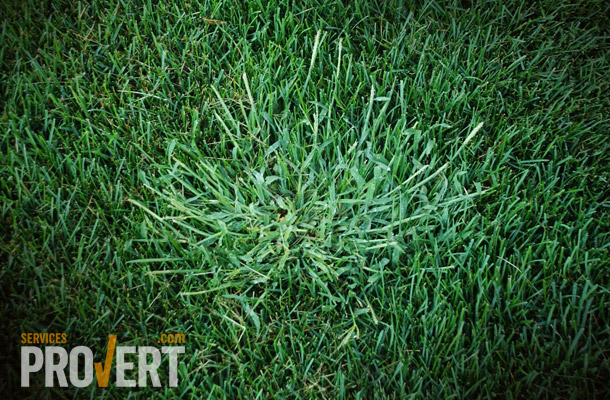
Crabgrass is an annual grass considered a common lawn weed. It produces a large number of small seeds that typically germinate in spring as soil temperatures begin to rise.
Many lawns become invaded by crabgrass, especially when the turf is thin or weakened. The denser and healthier a lawn is, the better it can naturally resist weed invasion, including crabgrass.
Crabgrass thrives particularly well during hot and dry summer conditions. During these periods, the growth of typical turfgrass slows down while crabgrass continues to grow rapidly and produces many seeds for the following season.
This difference is partly explained by the type of photosynthesis used by these plants. Most turfgrasses rely on C3 photosynthesis, which becomes less efficient under high temperatures. Crabgrass, however, uses C4 photosynthesis, allowing it to tolerate heat and drought more effectively.
Several lawn care practices can help reduce crabgrass in lawns:
- Increase mowing height to promote denser turf.
- Maintain balanced soil pH to support healthy grass growth.
- Aerate compacted soil to improve root development.
- Reduce excessive thatch buildup when necessary.
- Fertilize the lawn properly to encourage dense turf that competes with weeds.
It is also recommended to collect grass clippings when crabgrass is present. Clippings may contain a large number of crabgrass seeds that could germinate the following spring. If clippings are not collected in these situations, crabgrass may be reseeded unintentionally with each mowing.
When crabgrass covers a large portion of the lawn, more extensive lawn care practices may be required, such as:
- soil aeration;
- overseeding with quality turfgrass seed;
- topdressing with soil or compost;
- proper fertilization to promote turf growth.
Like all plants, turfgrass requires balanced fertilization to remain dense and healthy. Choosing the right fertilizer, applying the correct amount, and applying it at the proper time are essential.
Grass clippings contain nutrients that can return to the soil after decomposition when they are left on the lawn. However, this does not completely replace fertilization, since some nutrients are lost through natural processes.
The most appropriate fertilizer and application rate should ideally be determined through a soil chemical analysis, which identifies the specific needs of the lawn.
Common lawn fertilizers include:
- mineral fertilizers;
- organic fertilizers;
- natural or biological fertilizers.
What is crabgrass in lawns?
Crabgrass is an annual weed that produces many seeds and can quickly invade thin or weakened lawns.
Why does crabgrass appear in my lawn?
Crabgrass often appears when lawns are thin, soil is compacted, or summer conditions are hot and dry.
How can crabgrass be prevented?
To reduce crabgrass invasion:
- maintain a higher mowing height;
- fertilize the lawn properly;
- aerate compacted soil;
- maintain balanced soil pH;
- promote dense turf growth.
Should grass clippings be collected when crabgrass is present?
Yes. Grass clippings may contain crabgrass seeds, so collecting them helps prevent reseeding.
Can a lawn invaded by crabgrass be repaired?
Yes. Improvements can often be achieved through a combination of soil aeration, overseeding, and proper fertilization.
Do you offer weed control and lawn care services in Quebec and Ontario?
Yes. Services Provert provides professional lawn care and weed control services throughout Quebec and southern Ontario, helping homeowners maintain dense and healthy lawns.

sur la Rive-Sud


