


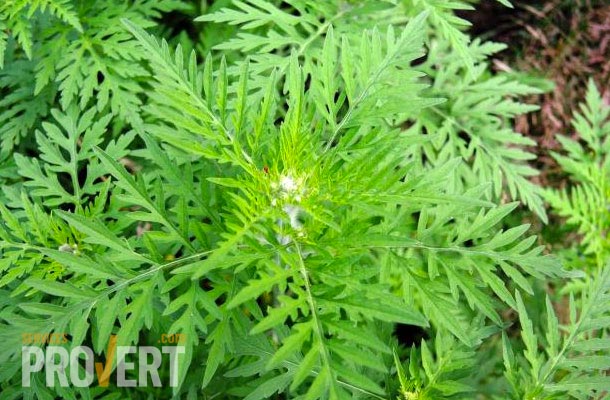
Ragweed is a common annual plant frequently found along roadsides, vacant lots, driveways, and poorly maintained areas. It can also establish itself in residential lawns, especially when turf is thin or weakened.
A single ragweed plant can produce a very large number of seeds, which can easily spread by wind, water, animals, or human activity. These seeds can reach nearby lawns and germinate when conditions are favorable.
Lawns that lack proper fertilization, are mowed too short, or have compacted soil are particularly vulnerable to ragweed invasion.
Ragweed typically germinates in spring. During the summer, the plant grows rapidly and eventually reaches maturity. At that stage, it produces highly allergenic pollen, which is responsible for hay fever symptoms in many people.
For this reason, it is important to identify ragweed early in the lawn in order to limit its spread.
However, eliminating ragweed can take time. The plant produces a very large number of seeds, and not all seeds germinate in the same year. Some seeds may remain viable in the soil for several years before germinating.
To reduce ragweed in a lawn, several lawn care practices are recommended:
- maintain a dense and well-fertilized lawn;
- mow at an appropriate height to favor healthy turfgrass;
- aerate compacted soil;
- overseed thin areas;
- remove ragweed plants before they produce pollen and seeds.
With proper maintenance and consistent management, it is possible to gradually reduce ragweed and improve lawn quality.
What is ragweed?
Ragweed is an annual weed that produces highly allergenic pollen responsible for hay fever in many people.
Why does ragweed grow in my lawn?
It often appears in thin or weakened lawns, especially when soil is compacted, fertilization is insufficient, or mowing is too short.
When does ragweed appear?
Ragweed usually germinates in spring and releases allergenic pollen toward the end of summer.
Why is ragweed difficult to eliminate?
Ragweed produces many seeds that can remain viable in the soil for several years, allowing the plant to reappear.
How can ragweed be reduced in lawns?
Maintaining dense turf, fertilizing properly, aerating soil, and removing plants before they produce seeds are effective strategies.
Do you offer weed control services in Quebec and Ontario?
Yes. Services Provert provides professional lawn care and weed control services throughout Quebec and southern Ontario, helping homeowners maintain dense and healthy lawns.

sur la Rive-Sud


