


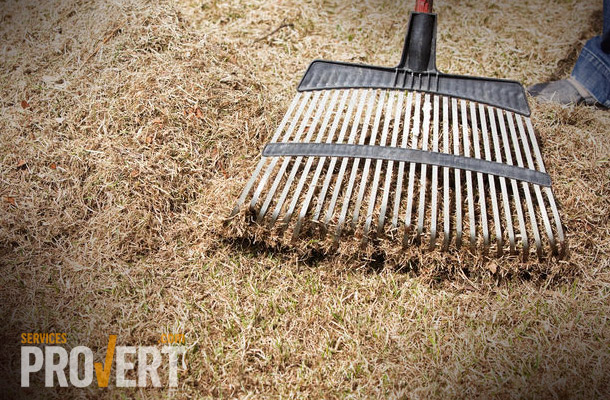
Thatch, sometimes incorrectly referred to as “lawn thatch buildup,” is a layer of organic material that accumulates between the soil surface and the base of the grass blades. It is mainly composed of dead stems, roots, stolons, and other plant residues.
Under normal conditions, this organic matter gradually decomposes through the action of air, water, and beneficial soil microorganisms. However, in some situations, decomposition occurs too slowly, causing thatch to accumulate.
Several factors can slow the decomposition of thatch:
- low microbial activity in the soil;
- compacted soil lacking oxygen;
- mowing too high and too infrequently;
- acidic soil conditions;
- poor soil conditions for biological activity.
When the thatch layer becomes too thick (more than about 12 mm or ½ inch), it can negatively affect lawn health. Excessive thatch may:
- reduce water infiltration into the soil;
- prevent nutrients from reaching grass roots;
- dry out the root system, especially during hot summer periods;
- encourage lawn diseases;
- reduce the lawn’s tolerance to heat and cold;
- limit oxygen circulation in the soil.
In these cases, lawn dethatching becomes necessary. This process removes excess thatch and improves the growing conditions for turfgrass.
Dethatching provides several important benefits:
- improved water and nutrient infiltration;
- better root development;
- denser and healthier turf;
- reduced risk of lawn diseases;
- greater resistance to weed invasion.
With proper lawn maintenance and dethatching when needed, turfgrass can become healthier, greener, and more resilient to environmental stress.
What is thatch in a lawn?
Thatch is a layer of organic material made up of dead stems, roots, and plant debris that accumulates between the soil and the grass blades.
When should a lawn be dethatched?
Dethatching is recommended when the thatch layer exceeds about 12 mm (½ inch) in thickness.
Why is excessive thatch harmful to lawns?
Too much thatch can prevent water and nutrients from reaching the roots, promote diseases, and reduce the lawn’s tolerance to environmental stress.
What is the best time to dethatch a lawn?
Dethatching is usually performed in spring or late summer, when the lawn is actively growing.
Do you offer dethatching services in Quebec and Ontario?
Yes. Services Provert provides professional lawn dethatching and lawn care services throughout Quebec and southern Ontario, helping homeowners improve lawn health and density.

sur la Rive-Sud


